Thomas (Pop) Maloney
1915
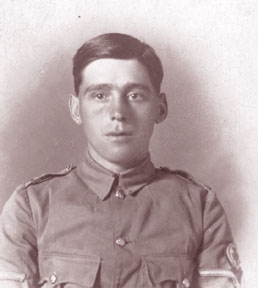
Thomas Maloney 1915
New Year's Day, Friday 1 January 1915.
This morning the weather was fine, with a clear blue sky. It had been rather cool during the night, but as the sun climbed higher into the sky it soon warmed up. Only a few of the chaps were detailed for work, the rest were having a good time, football, swimming in the sea etc. Tom, Billy and their pals went swimming in the sea. Then they got a boat out and went rowing in the harbour. They were invited on board the American Battleship "North Carolina" for a look round. In the evening they had an enjoyable time in the town. They could not stay out too late, because Billy was on early duty. He had been detailed for orderly cook, and had to be up by 0400 hours
Saturday 2 January
Another lovely morning. It was a short working day, and most of the lads did not have much to do. After duties Billy put his uniform on and went out with Tom and some of his friends. There was Barrett, McDonald, Mansbridge and Greenhalgh. First they went round Whooza Gardens and enjoyed the sights. Then they went to the pictures (modern), silent of course, with piano background music. At 2100 hours they went to the Grand Cafe for something to eat and a drink. They arrived back at their billet at 0100 hours, Sunday. Reveille was at 0600 hours, then breakfast and the usual morning parades, which included church parade. After dinner they played a game of football against the Government Officials and beat them 2-1.
Monday 4 January:
It was rather cold in the morning. The boys had very little to do in regards to work in the hospital, some of them did fatigues. In the afternoon it was swimming and playing football. In the evening there was a singsong in the canteen.
Tuesday 5 January,
The weather was beautiful with sunshine and clear blue sky, the sea very calm, just like a park lake. William managed to buy a chicken from a "mangy wallah bint" (I guess he meant an old Egyptian woman). It proved to be a very tough old bird. In the afternoon the lads had arranged a football match with the sailors from HMS Proserpine. The Lancashire lads turned up looking very fit and sunburnt, they beat the navy lads 5-0. The sailors gave them a concert in the evening, which was enjoyed by everyone.
Wednesday 6 January
Saw everyone working hard; a hospital ship had arrived in the harbour, which kept them busy all day. The boys received mail from home when they finished work. Tom, as usual, received a batch of letters from Florrie. Thursday the weather was glorious. Some of the chaps got a boat out and rowed out to HMS Proserpine. They had been invited to have a look round the British ship.
Tuesday 12 January
During the past few days news had been coming through from the German Western Front that continuous fighting was taking place with entrenchments extending in an unbroken line from the Belgium coast to the Swiss frontier. The extent of the fighting caused some concern among the boys. However, it was forgotten for a time in the evening. They went to a concert given by the people from St Marks. Later in the night it went very cold, and for two hours there was a storm at sea.
13 January
Not a great deal was happening. After duties there was a return football match with the hospital staff, it finished in a 2-2 draw.
14 January
A lovely morning, the sea very calm and smooth. A number of the lads who were not working were able to go swimming in the sea. Post arrived from home it was getting more regular now that a lot more ships were arriving from England.
15 January
Another fine day, but the sea was not so calm. An Egyptian named Ally took some of the lads out to sea in a motorboat. They had a fine adventure, when they got way out the boat started rocking. They were very interested in the numerous different species of fish they saw, and curious to know the types, unfortunately Ally was no help. In the evening, being Friday and payday they went back to camp and had an enjoyable time with their friends.
During the next few days Tom and some of the boys went to work on a hospital ship in the harbour. The rest of the lads had an easy time while they were away.
Wednesday 20 January
The chaps were all back on shore. A football match was arranged with the Red Star Football Club an all-Egyptian team. The lads got a shock when the native players come onto the pitch; they were all bare footed! They got another shock when the game started the men’s feet were as tough as old boots. Not only had they got dirty feet, they were dirty players. Very soon a number of the lads were injured. So Private Walters, one of the RAMC team, started bumping the Gypoe’s around. That's when the game got very dirty, and a bit of a shambles. It finished up with the Military Police escorting the Field Ambulance team back to camp to ensure there would be no further trouble. They lost the match 2-0.
22 January:
The 5th and 8th Lancashire Fusiliers arrived in Alexandria; they had come from Cairo. The boys were very pleased to see them and went looking for friends from home. It was payday and the cafes in town were busy that night.
23 January
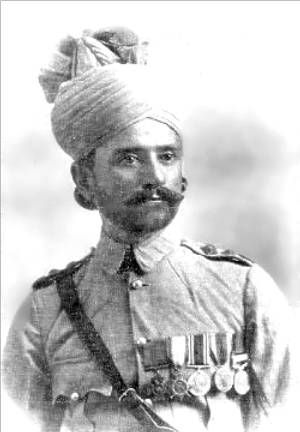
Most of the men from the Ambulance Section were working on a hospital ship in the harbour today. The ship had come from France with Indian troops on board most of them were suffering with frost- bite. There were some wounded among them. One of the men they met while on the ship had been awarded a VC during the fighting in France. He was the first Indian VC of the war.
His name was Subadar Khudadad Khan he was born in Dab Village, Punjab State, Pakistan. When war broke out he joined the Army as a Sepoy or Private soldier and served with the 129th (Duke of Connaught’s Own) Baluchis as a machine gunner. In October 1914 his regiment was sent to the front line in France to help exhausted British troops. The Baluchi’s were pushed back by the Germans and all the gunners were killed apart from Khan who was badly wounded. For his bravery in France and his involvement in preventing the German Army reaching vital ports, Khan received the Victoria Cross. He was the first native-born Indian to receive this honour. He died in 1971.
During the next month the First Field Ambulance Section worked very hard with hospital ships arriving in the harbour most days. There were also the troop ships in ever increasing numbers with the usual sick on board. When the men were not working they were training. Treatments and methods were being altered and improved daily in the light of experience. However, in the evenings they still found time to go swimming or playing the odd game of football, now and again a concert at night.
Saturday 20 February 1915
The weather was getting very hot. There was a Russian battleship in the harbour. Some of the RAMC were invited to dinner on board. Tom and Billy were among those who went. Tom was not keen on the Russian food, but Billy enjoyed it he was always hungry, and enjoyed the word food. They all had a fine time on board the battleship and made friends with the crew.
24 February
The sea was rough but this made no difference to the Russian warship, it sailed out of the harbour into the rough waters of the Mediterranean. Many other ships arrived today amid rumours that something big was going to start soon, maybe another campaign.
26 February
Mail arrived from home. Tom received a special letter from Florrie, to tell him that he was a father. Their son, Thomas, was born 10.00 am Friday 12 February 1915. He was born at her father and mother's home, "The Beehive Inn", 3(a) Kempster Street, Lower Broughton Salford. It being a Friday, army pay day, Tom took all his friends in the canteen that night, for a celebration drink. There had not been a lot of work for the chaps today, but they had seen more troop ships arriving in the harbour. A number of the ships had Australians on board.
Sunday 28 February
A lovely morning, a rough sea, the temperature was rising daily. All sorts of rumours were going around the camp. Some said the Turks were making another attempt to reach the Suez Canal. The 42nd East Lancashire Division, of which the 1st Field Ambulance Section was a part, were given orders to hold themselves in readiness to move at any time. That meant they were not allowed out of camp, unless on duty.
Monday 1 March
Another fine day. The boys had very little work most of the day, just hanging around expectantly. There were numerous troop ships in the harbour and more arriving daily. There was definitely something in the wind.
2 March
A lovely day, very hot. The harbour at Alexandria was packed with ships, all crammed with troops. They took an Australian off one of their troop ships he had cut his own throat. There was a lot of concern when they brought him into the hospital.
3 March
Excitement in the camp this morning; shortly after reveille 60 men from the First Field Ambulance Section were ordered to get their kit packed ready for a move to Cairo. This had probably been brought about due to the Turks making a move towards the Suez Canal. All the men were paid today instead of Friday. After pay parade the chaps left for Cairo. This left only a few RAMC personnel for hospital and hospital ship duties. There was nothing much doing the rest of the day the camp was very quiet without most of the men.
10 March
Not a lot of work during the previous week, apart from hospital duties and trips down to the harbour to collect sick men etc. Transporters and troopships kept arriving and some left. There was talk that some of the ships had gone to Mudros, a port on the Greek island of Lemnos.
Saturday 13 March
There had been no excitement in the past few days and not a lot of work for the ambulance men. Aly the Egyptian took some of them on a trip in a motorboat to see a very big German Prize steamer, which had been brought into the harbour. The Egyptians were excited and starting towing it round and round the harbour.
15 March
Tom, Billy and the boys were surprised today; it rained for two hours. This was the first time they had seen rain since they arrived in Egypt. A troopship arrived in the harbour, fresh out from England, with some of Kitchener’s volunteers on board. The TA and regular army soldiers were not very keen on "Kitcheners Army" - as they called them. They did not rate them very highly. This was because they had not had the same training they had received; therefore they were not as proficient or disciplined as themselves. There was rivalry and it showed in the way they referred to them. Billy wrote: "Kitcheners Army were allowed ashore, and one of them was admitted to hospital tonight, for speaking out of turn to a Lancashire Fusilier."
16 March
Billy wrote: "Kitcheners Army go mad in Sister Street, swanking they are regulars, and got wiped up by Terriers." (T.A.) However rain stopped play and it continued to rain all night.
19 March
Orders came through at 2000 hours; everyone to pack their kit bags for a move to Cairo. The camp became a hive of activity, eventually they were all ready and waiting for the word to go. Then the move was cancelled. The grumbling and quite a few curt remarks were passed, until lights out.
20 March
A large French Auxiliary Cruiser arrived in Alexandria harbour, loaded with French troops. Rumours were going round that the build up of troops was for a campaign against Turkey, to take place on the Gallipoli peninsula in the Dardanelle’s.
Wednesday 24 March
The weather was rather windy in the morning. A considerable number of British troops were being sent to Cairo, but not the 1st Field Ambulance. French troops were taking over part of Moustapha Barracks in Alexandria, and part was being turned into a base hospital in readiness for the coming battle in the Dardanelle’s. The forthcoming campaign in Gallipoli seemed fairly certain now, but the security of information appeared to be either very poor or nonexistent.
17 April
During the past few weeks’ troopships had been arriving daily. Thousands of British and French, all regular army soldiers had landed in Alexandria. Some of the ships had left again, bound for Mudros. Today troopships arrived with Australians and New Zealanders on board. Billy had been detailed to assist the unloading party, they were kept busy all day unloading the sick and taking them to the hospital.
18 April
Another hospital ship arrived with wounded and sick men from France they were all Indian soldiers. The Field Ambulance Section spent most of the day transferring them to the hospital.
24 April
On this very nice warm Saturday morning, Tom wished his brother Billy many happy returns of the day. It was his 23rd birthday and a registered letter arrived for him from Blighty. It was a birthday present from his dear mother, a gold signet ring. They celebrated in the canteen, after duty, and at night, after lights out, as it was a very warm night, they went swimming in the sea.
25 April
Unknown to Tom and his friends on this pleasant, sunny Sunday morning, troops were landing at several places on the Gallipoli peninsula. The losses were fairly heavy, as the Turks had strongly fortified positions on high ground. The Lancashire Fusiliers made what was described as a glorious landing on W beach (see map). The beach was later called "Lancashire Landing".
26 April
Very hot day, not much work for the boys so they went for a cool dip in the sea. There was excitement in the camp when the FA cup final result came through from Blighty, Sheffield United 3, Chelsea 0.
The match had been played 2 days earlier on Saturday the 24th of April at Old Trafford, Manchester, instead of the normal pre war venue of Crystal Palace in London, the match was watched by 49,557 spectators, many wearing there service uniforms, leading to the game becoming known as ‘The Khaki Final’ it was also the last cup final to be played until after the war had finished.
27 April
Fine weather again, the Lancashire lads said "fair roasting". The war had almost been like a holiday so far. In the afternoon they went swimming in the sea, behind the lighthouse and played water polo. They had a grand time and, of course, some ducking. They got some initial news from the Dardanelle’s that evening. British forces had landed on the Gallipoli peninsular with some success, but there had been a lot of casualties. This meant Moustapha (Barracks) hospital would be needed. The Gallipoli peninsula is part of the Turkish Republic. The peninsular lies between two openings of the Aegean Sea, the Gulf of Saros and the Dardanelle’s, and its importance is due to its position on the way to Constantinople, the former name of Stamboul or Istanbul. The most important places are Gallipoli, a small seaport and Kilid Bahr (see map).
28 April
Ras-el-Tin, Alexandria, a lovely fine sunny morning. Mail arrived from England. Tom and William both received letters from home, dated 15 April 1915. During the day some of the men were sent down to the docks, to unload a ship, which had arrived from Mudros with 50 sick Australians on board. The lads were able to get some information from the sick men, about the Island of Lemnos, but not a lot about the fighting at the Dardanelle’s. The sick Australians had not got that far. They did say the battle ships were pounding the Gallipoli coastline. Mudros is a coastal town on the south coast of the Greek Island of Lemnos, and was being used as a British base during the Gallipoli campaign. The Island of Lemnos is 45 miles from the entrance to the Dardanelle’s. Quite a number of the soldiers had been taken ill while on the island. They said some of the islanders they met, were not of a pleasant disposition.
29 April
Another gloriously fine day with clear blue sky, sunny and hot. The RAMC personnel did not have the pleasure of the good weather they were too busy a ship arrived from the Dardanelles with 1,500 wounded men on board. They all had to be attended to and transported from the dock to the hospital. There were some very badly wounded, needing careful handling. Among the wounded were some of the men who had taken part in the first landing on the Gallipoli peninsula on the morning of the 25th. Tom, Billy and the boys worked none stop, with just the odd mug of tea and a sandwich, until 2300 hours. Then they had a meal and went to bed, tired out.
30 April
Reveille 0530 hours, breakfast 0630 hours, they were taken by motor-ambulance to the docks. More ships had arrived with wounded. Again the work went on most of the day. The last men were taken to hospital at 2000 hours. During the movement of the wounded to hospital, the RAMC boys gained much up-to-date information as to how the battle for Gallipoli was progressing. The Turks were putting up a very fierce resistance and a considerable number of British troops had been killed and wounded. The Lancashire Fusiliers had made a successful landing on the seashore, on the part code named "W" beach in the morning of the 25th. The Turkish resistance was extremely tough. Progress inland was up hills from the beach, and very difficult in the circumstances. The Turks had positions, strongly fortified on the high ground. From these positions the Turkish artillery shelled the beaches and their machine guns continually strafed our lads.
1 May
After breakfast they went by motor ambulances to the docks again. The wounded they had to attend to were on a ship called "Chin Chung". When the ambulance men went on board they found every available space on the ship was packed full with wounded men. They were a pitiful sight; most of them did not have dressings on their wounds, there was blood everywhere. There was a lot of work to be done before they could move some of the badly wounded. The chaps were kept busy all day and they saw horrific sights, the like of which they had never seen before. The lads were very tired and felt shattered when they finished work at 2100 hours. They had a surprise when the returned to camp, their friends who were sent to Cairo on 3 March had arrived back, together with a small detachment who had been to Cyprus. The boys were tired, but they were pleased to great the returning men and had some fun and joking with their friends, there was a lot of news to be exchanged between them.
2 May
Great excitement in the camp this morning. On the first parade they were ordered to pack their kit, ready for a move to a war zone. Their kit bags were packed and left in the Quarter Master's store at Ras-el-Tin camp. They were issued with war kit and equipment ready for the move.
Monday 3 May
The First Field Ambulance Section was relieved at 0700 hours this morning by men from the South Midland Section, RAMC, who took over their duties at Ras-el-Tin hospital. Shortly afterwards Tom and his friends were sent down to the docks, to wait for a ship. They waited on the dockside all day, without anything to eat. Eventually they embarked on the SS Roman Prince, at 2200 hours. They were told to sleep wherever they could find space.
4 May
The ship had not sailed during the night. It was 0500 hours in the early morning when it sailed out of the harbour at Alexandria. The weather was fine, out in the open sea it was very calm. The lads were told their destination was Gallipoli. Some of the men were excited, including William. In his own words: "All excited, we're going to the Dardanelle’s." Anyone would have thought he was going on a Sunday picnic. Instead they were going into the thick of the fighting, in what was known to be a bloody war zone, in more ways than one. During the night they had not slept very well, but in the afternoon on a calm sea they had a good sleep, on the ship's deck.
5 May
Weather fine, another grand day, sea calm. The ship sailed within sight of land all day. The lads did not have much to do, like fatigues. They wrote letters, played cards and had a singsong. In the evening there was nothing Tom and his pals could do in the dark except talk. They were sleeping on deck, in the fresh air, so they tried to sleep. It would not be long now, before the ship reached its destination.
Thursday 6 May 1915
When the lads woke up it was a wretched morning, very cold and windy, sea choppy no land in sight. At 5.00 o'clock they saw land on the horizon, excitement broke out on the ship. The Lancashire lads could see the battleships bombarding the Gallipoli peninsula. They had seen the result of the campaign on the hospital ships in Alexandria harbour. The wounded in pain, suffering, distressed and fatigued. Now they were entering the battle zone, where it was all happening. The ship Roman Prince approached the land through the Aegean Sea, it then sailed parallel to the coast, to a point off Anzac beach. When it got there the captain was ordered to take the ship back 15 miles to Cape Helles. Once there, the anchorage was well out to sea off the tip of the peninsula. The sea to the right was the Dardanelles Straits on the left was the Aegean Sea, the ship's approach route. Their position now was in among the battleships, which were pounding Achi Baba with huge shells. In front of them, on the peninsula they could see Achi Baba, a ridge on the high ground where the Turks had a fortification with large numbers of troops equipped with rifles, machine guns and artillery, in a position to strafe and shell our troops on the beaches. They also had snipers in strategic positions. Billy said the ships bombardment was a very fine sight. Tom said it was a bombardment he would always remember, because it was the first he had been close to, and the feeling he experienced with every flash and bang from the guns, was tremendous. The Roman Prince was only small compared with the large battleships, it seemed to rise in the water when the shells were fired, and settle down again as the shells sped on their way. The brothers both said it must have been hell for the enemy on the receiving end of the barrage.
7 May 1915
Another cold miserable morning the battleships big guns were soon in action shelling the Turkish positions. Occasionally the lads saw the destroyers patrolling the coast, protecting the battleships from submarine attack. On the land in front of them they could see "W" beach (Lancashire landing) to the left, and "V" beach to the right. Further to the right was the Turkish fort of Sedd El Bahr its stonewalls had been well and truly pounded with heavy shells. Beyond the fort was "S" beach.
The bombardment went on most of the day, while on land our troops were engaged in heavy fighting. They made some progress and advanced a short distance.
On the same day but unknown to the troops the Liner Lusitania, was sunk by a German submarine, of the 1,959 passengers and crew aboard, 761 survived, 1198 were killed. There is a very graphic account of the sinking on the website: http://www.firstworldwar.com/features/lusitania.htm
8 May 1915
A complete change in the weather lovely morning bright and cheerful the boys were up early to witness the battleships go into action. To their surprise they found the Roman Prince was no more than 20 yards from the battleship Queen Elizabeth. She was a truly magnificent sight at close quarters with her enormous guns pointing menacingly from behind the dark grey armour plating. There was much to observe and admire about the complexity of her superstructure. As they watched, the guns began to traverse and elevate, then stop! There was a flash followed by an almighty sound, like a crack of thunder, the Roman Prince seemed to jump up in the water. The bombardment had commenced, Queen Lizzie, as the lads soon began to call her, was firing her fifteen-inch guns, while the Roman Prince danced about like a cork in a bath tub. The barrage went on for a long time. Some of the lads put cotton wool in their ears to protect them, and deaden the sound. There was fierce fighting on land during the day. News was relayed to their ship in the evening that our troops had advanced one mile. Tom, and his friends were beginning to wonder why they had still not been ordered to disembark from the ship.
9 May 1915
Weather fine and warm this Saturday morning. There was no bombardment from the battleships and only light firing on land, some sporadic machine-gun fire and rifle fire. In the afternoon the battle on land intensified and the British troops pushed forward, the lads were told they had advancing four miles. News came through from the French troops. The Turks had attacked and the French had retreated one mile on their front. Late in the evening news reached the ship, an enemy village had been captured by our troops, after 15 days of fighting. The warships had not fired a shot all day.
10 May 1915
After breakfast the Ambulance Section received orders to start bringing their equipment and rations etc out of the ship's hold. It was loaded into nets and slung onto a lighter, which had pulled alongside the Roman Prince. Loading went on most of the day. Tom and the other NCOs were informed during the day that they would disembark late the following day. The lighter would take them to a landing point on "W" beach or, as it was more commonly known to Tom and the boys, "Lancashire Landing". This name was given to the beach because the Lancashire Fusiliers had made a triumphant landing there on the morning of 25 April 1915. The late news came through that the Lancashire Fusiliers had been in action during the day and done very well but there had been a few casualties.
11 May 1915
Weather very windy and a rather cold morning. Guns quiet out at sea, heavy fighting on the peninsula. The Manchester Territorials, (or Manchester terriers, as the lads called them) were in action. There were not many killed, but they had to retreat a short distance in he afternoon. At 17.00 hours the battleships opened up. The bombardment was probably covering fire for the troops disembarking. The lads were ordered to transfer to the lighter. By the time they were all aboard it had started to rain. The small ship then made its way to Lancashire landing there they disembarked amid torrential rain. Fortunately the Turks did not fire on the lads during their landing; maybe that was due to a combination of the heavy rain and the ship's heavy bombardment, giving them cover. By the time they were all off the lighter and up the beach with their equipment, it was rather late and very dark. Soaking wet and dejected they were told to get bedded down as best they could. Fully dressed with their hats and boots on they lay down on their ground sheets on the sand and covered themselves with their capes to try and keep the rain off.
12 May 1915
The rain had poured down all night. By morning, with very little sleep, they were wet through and very miserable. Without anything to eat, some of the men started work immediately, they found many wounded men were lying unattended on the beach. The others were moved further inland, there they had to start making a base and dugouts, for their own protection and in order to sleep better the next night. The work went on all day, and so did the rain, making it a very unpleasant job. At one period the Turkish artillery opened up on them, planting nine shells very close. Luckily no one was hurt. Further inland there was a battle going on, which lasted most of the night.
13 May 1915
Change in the weather, lovely bright morning. The boys had plenty of work to do. Tom and his section were attending to casualties, while some of the men were improving the base and dugouts. In the afternoon, the Turkish artillery started shelling their base. Some of the shells fell on their dugouts, wounding four of their men, one very badly. At night under, cover of darkness, they had to move their quarters to a new location. Fortunately with fine weather the work was more easily done.
14 May 1915
The lads felt lucky this morning, lucky because they had moved to a new site last night!! Very early in the morning, there was very heavy shrapnel fire (shrapnel is hundreds of lead balls the size of marbles, which filled the case of a shrapnel shell) concentrated on their old campsite. The Turks obviously thought they were still there. The Army Service Corps base was also shelled rather badly in the afternoon. In the evening the Turks bombarded the field ambulance base once again.
15 May 1914
Weather fine day very sunny and bright, Billy said, "It's a champion day for a picnic!" But the Turks thought differently; they fired down on them most of the day with machine guns and rifle fire. Their artillery also opened up, pounding the RAMC base once again. At one period they switched their fire and concentrated on one of the ships out at sea. The shells really peppered it the Lads found out the men on board were Turkish prisoners of war! Instead of his picnic, Billy spent most of the day digging deeper into the ground for safety. Not much doing during the night.
16 May 1915
Another fine sunny morning due to the heavy shelling of the base the previous day it had been decided that it would have to be moved and reorganised. The lads were up at dawn and got on with the job, removing stores and equipment etc. to a new location. Only "C" Section did their normal work, attending to casualties. The battleships out to sea started shelling the Turkish positions early in the morning and kept it up well into the afternoon. The Turkish kept up heavy rifle fire down the gully all through the night, making it difficult for the ambulance men to bring the wounded down to the base.
17 May 1915
It was rather a quiet morning and most of the boys were doing their normal medical work. A detachment was sent to the A.S.C. base to draw rations. While they were there the enemy shelled it, fortunately there were no casualties. During the day the Manchester Terriers engaged the enemy, fighting was fierce and they advanced 450 yards by night- fall they were still doing well.
18 May 1915
There was very little action during the morning; no firing. The boys were just doing their normal jobs, looking after the sick and wounded. They got a welcome issue of 40 Black Cat cigarettes each. In the afternoon all hell broke out; Johnny Turks attacked violently strafing them with machine-gun fire and shrapnel shells this went on for a very long time into the night. All they could so was get well down in the dugouts
19 May 1915
The field ambulance section worked normally most of the day. There was some shelling at one period, but the shells passed harmlessly over their position. The Turks attacked the Manchester Terriers during the day, but the terriers managed to hold their line, with few casualties.
20 May 1915
Heavy firing from both sides throughout the day many casualties the ambulance section was kept very busy all day and well into the night. There was one bright spot late in the day when the lads received welcome mail from home.
21 May 1915
The R.A.M.C. Field Ambulance Section's routine for treating casualties to-date: the wounds were attended to in a number of small dressing stations that had been set up in dugouts etc. The badly wounded needing major surgery, were then carried on stretchers down the gully to the beach, under cover of darkness from there, they were taken by lighter to the hospital ships out at sea. This was a very uncomfortable journey for a badly wounded solder. The commanding officer, decided it would be better if they had a hospital on the peninsular to give the wounded more extensive treatment as soon as possible. This would give them a better chance of surviving the long journey in the hospital ships back to Murdro's or Egypt. This morning all the men not engaged on medical duties, were detailed to work on the construction of the hospital. With the help of the sappers, this meant digging into the Cliffside. Billy was one of the diggers. He said the work was very hard and the lads' hands were blistered and sore at the end of the day. The sappers were used to the type of work and it did not trouble them.
22 May 1915
A dismal wet morning. Not a lot of action on the land. The excitement was out at sea. The destroyers protecting the battleships were hunting a submarine, which had been detected in the area. Tom and Billy managed to go for a swim in the sea, under cover of the cliffs, out of the line of gunfire. This was their only means of getting a bath, delousing and a clean shirt, they did not know when they would get another opportunity in the future. Earlier in the day the 1st Field Ambulance Section had been told they would be moving up to relieve the 2nd Field Ambulance Section at the front. The move was timed for 17.00 hours. They walked to the communications trenches, this was a long winding trench, which led to the reserve trenches beyond them was the front line. The lads relieved the 2nd Field Ambulance at a place, which had been named Clapham Junction. There were plenty of dugouts in the trenches for them to sleep and do their first-aid work. It was dark and late by the time the change over had taken place so they could not see a lot of the surroundings. They knew these were going to be their billets for about ten days; the duration of their stint. They each found a place in the dugouts and lay down for the night. The place did not smell too sweet, the boys from the 2nd Field Ambulance had slept in them for the past ten days, without a bath or for that matter a proper wash. They had certainly left the odour of their feet behind and possibly a few creepy-crawlies!
23 May 1915
It was a cold and windy morning. They were awakened by the sound of the Turkish artillery. Billy said it is Johnny Turks way of saying good morning. There was a fair amount of work for the ambulance section early in the day. In the afternoon the bombardment intensified and the casualties increased, they were kept very busy for the rest of the day.
24 May 1915
Visibility was very poor this morning. A mist blanketed the area, but it did not stop the Turks having a go at the Clapham Batteries. Despite the numbers of shells he sent over, there were no casualties in the morning. There were a lot injured during a bombardment in the late afternoon.
25 May 1915
Tom spent a lot of his time working in the dressing station. When there were no casualties they worked evacuating wounded and improving the amenities, enlarging the station or preparing equipment for the next batch of patients. There was always a lot of work to be done, including burying the dead when they were able to get to them. In the morning Billy and some of the boys had been given the job of making a new dressing station for the 3rd Field Ambulance Section. The Commanding Officer had ordered another Ambulance Section in, knowing the amount of work his men had to do, very often without sleep and what is likely to happen in the near future. The boys worked hard, but in the afternoon due to heavy shelling by the enemy, they were forced to spend a lot of time in the dugouts. Despite the heavy shelling there were not the number of casualties one would have expected.
26 May 1915
Weather beautiful. There was a very heavy bombardment in the morning. The dressing stations were kept busy. It eased off a little in the afternoon. At night it was quiet apart from the star shells, which kept going up in various places accompanied by the snipers firing.
27 May 1915
Weather clear blue sky and sunshine a very fine morning. In addition to the usual artillery bombardment on land there was action and excitement off Cape Helles, when a submarine attacked and sunk one of the British transport ships. Tom and Billy watched with interest as the British naval destroyers swept the area off the Cape, chasing the submarine. They had to go back to work therefore did not know if the submarine was sunk, much to Billy’s disgust.
28 May 1915
The good weather continued, but the outlook on the war front was not so good. Turkish artillery opened up before breakfast. The bombardment was heavy and concentrated. The lads were very busy. The 1st and 2nd Field Ambulance men were working together when young Barrette from the 2nd Field Ambulance was killed. The barrage eased in the afternoon and the men were issued with 40 cigarettes each.
Later in the day the 7th Manchester engaged the enemy and there was very heavy fighting. Our infantry suffered a considerable number of casualties. The ambulance men carried the badly wounded men to the dressing stations where the staff attended to their injuries. Then the stretcher-bearers carried them down the line to the hospital in the cliff face. By late evening the 7th Manchester Regiment had advanced 120 yards, during intense fighting.
29 May 1915
The exchange of gunfire continued throughout the night and well into the morning. The Field Ambulance Section were kept very busy both in the first aid post and carrying the more seriously wounded down the line. The fighting eased off in the afternoon, and at night it was very quiet. Billy said, quiet enough to de-louse peacefully.
30 May 1915
Weather getting hotter each morning, it was really lovely early morning. Mail arrived and both Tom and Billy received letters from home. They had plenty of work to do, in addition to dodging bullets. In Billy's words "simply hell, bullets flying down the gully all day".
31 May 1915
Very hot all day and the lads were kept busy. In addition to attending to casualties, some of them were digging, improving and repairing shell damage to the first-aid posts and dugouts. Billy said repairing shell damage seemed an everlasting job. At night the artillery fire was very heavy, this made it very difficult to take a lot of the wounded men from the first-aid posts down the gully to the base hospital.
1 June 1915
Rather quiet in the morning this gave the ambulance men the opportunity to carry a lot of the wounded men from the dressing station down the gully to base hospital. The weather was very hot by midday. In the afternoon the action also ‘hotted’ up, making up for the quiet morning and the ambulance men had a lot of work attending to the casualties, In addition they still had to carry a lot of wounded from the dressing station down the gully to the base hospital.
2 June 1915
Splendid summer morning, clear sky very warm. The lads had spent the night at the base, taking advantage of the fine weather they had a good wash in the sea and then went for a swim. They got rid of some lice from their clothes and were given clean shirts before starting their journey up the gully to the front. Back at the first aid post the Turkish artillery opened up on their position in the afternoon and again in the evening. They got well down in their dugouts fortunately none of their staff was injured.
3 June 1915
Excitement in the British lines as preparations got underway for another big attack on Krithia to take place on Friday 4 June. In the afternoon the enemy artillery started a bombardment using shrapnel shells. There were a lot of men killed and wounded. The field ambulance men had a very uncomfortable time going about doing their work and dodging the enemy fire. At 17.00 hours Tom was ordered to take 12 men, including Billy, and move up to the front line trenches, ready for the attack next morning. It was as if the Turks knew of the attack, the lads came under very heavy rifle fire all night.
(Note: it must have taken extreme courage to go over the top, armed only with a stretcher and first aid kit. I personally would have wanted a rifle to fight back. Many years later I was told the lads laughed and made jokes while they waited. Billy, who was always cracking jokes said, "If I meet any objectionable Turks, I will crown them with my stretcher and then give them a free ride to the first aid post.")
4 June 1915
After a very uncomfortable night, being shot at and crouching in the trenches, the men were tired and hungry. With the first light of dawn the Turkish artillery and rifle fire intensified. It was a dull cloudy morning, which matched the men's mood especially when no rations arrived, due to the heavy bombardment. Tom decided, he would not ask any of the men to go and collect the rations he would go himself. He waited for a lull and then started to make his way down the gully. Part way down the rifle and machine gun fire increased again an officer in charge of the section ordered Tom back saying, "It is too dangerous to take the risk." The fire became so intense everyone was ordered to take cover in the front line dugouts. After what seemed ages, there was another lull and Tom made a second attempt and dashed down the gully. This time he got through and managed to get some food for his men. He got it back safely to the men in the trenches. Billy and his mates started to cook their breakfast in the trench below the parapet. Breakfast was cooking nicely the smell was good the water for tea was nearly boiling, in a Dixie. Then a shell hit the top of the trench smashing the parapet and knocking it down onto the food below. Their breakfast was completely ruined, being covered in debris. The Dixie was also smashed to pieces. Shortly after, the British artillery opened up with all guns, firing shells into the enemy positions as fast as they could, which seemed to be devastating the Turkish positions the noise was terrific. Dust was rising into the air and slowly blowing back onto our trenches, now crowded with troops preparing to go over the top. The infantry each carried his rifle, entrenching tool, pouches full of ammunition and a sandbag part filled, some of the men were carrying spades and others picks. At noon they started their push forward, with orders that if they got the Turks on the run, they were to follow up and if possible take Achi Baba! Tom and his men, with empty stomachs went forward behind them. It did not take the Turks long to realise a determined attack was taking place. They quickly replied increasing their artillery, machine guns and rifle fire. The noise was tremendous for the next four hours. The lads could not hear one another speak above the continuous deafening noise! It was like hell, a terrible strain on everyone's nerves. There were dead and wounded everywhere, some of the dead were from previous encounters and were badly decomposed. The combination of smells was foul and the hordes of flies aggravated the situation for the injured men and the ambulance men attending their wounds. Some were bandaged immediately to stem the bleeding. If they could walk, one of the ambulance men would gather a number of them with different injuries and would lead them back to the first aid post, helping one another along. The badly wounded were carried back, usually on a stretcher some piggy- back. Our men advanced between 600 and 700 yards during the push, but were unable to achieve their objective, due to very fierce resistance by the Turks who were well dug in on the high ground. Casualties were heavy on both sides and a considerable number of Turks were taken prisoner. At the end of the day Billy said, "Oh what a day, never to be forgotten by all who took part in it, especially the East Lancashire Territorials who were in the forefront of the attack.” He went on to say the day had been like Hell and a terrible strain and he had so much dust in his throat it would take many pints of beer to clear it. (One of the Lads said he wished there was a local beer house) Tom said their men had very little sleep last night and they had worked none stop all day without food in the most terrible conditions, most of the time in a cloud of dust and under very heavy fire from artillery, machine-guns, and rifle. It was enough to test any mans nerve to the limit, but back in the dug-outs, tired, fatigued and very hungry, some of the men like Billy were still able to joke. Billy said he would make do with a few mugs of tea, a good feed and a de-lousing session, he said the lice had been feeding off him all day. Twenty six of their men had been wounded and W Hughes was awarded the D.C.M."
5 June 1915
Lovely morning clear sky sunny and warm it is spoilt by the smell of war, hundreds of rotting corpses not able to be buried due to the continuous heavy gunfire, the smell of gunpowder from the nearby artillery and the stench from the open latrines. These are holes dug in the ground with Y shaped branches from a tree placed in the ground at either end with a pole across for the men to sit on while relieving themselves. Periodically the excrement is covered with soil there are a lot of men and it not often enough to avoid the smell and attract the thousands of flies, blue bottles and other insects that swarm in the battlefield area. The ambulance men toiled all day and night carrying wounded down gully ravine from the trenches to base hospital, under constant fire.
6 June 1915
The Turkish guns opened up early in the morning the bombardment was exceptionally heavy. Billy said they seemed desperate to throw everything at us, dropping shells and shrapnel everywhere. This went on all day, the field ambulance section was kept very busy up and down the gully with their wounded comrades hardly any rest and no food (said Billy) everyone was exhausted. The headquarters staff had seen them passing up and down all day and one time in the late afternoon when they passed, they asked the Lads if they’d had anything to eat? Next time they passed they were given hot tea and bully beef. Then they were off again under constant bombardment listening for the whining of the shells coming over if they were close they had to get down quick. On one of their trips down the gully a shell fell among them killing A J Bridge instantaneous, Lyth, Shepherd and Simpson were wounded. The Lads were kept busy most of the night.
7 June 1915
Still very busy attending to the wounded this morning, shelling no near as heavy therefore the lads, were not under the same pressure. In the afternoon they were brought out of the front line for a rest, they were glad to be out of it for a while and welcomed a good sleep. There was a heavy bombardment at sunset by the French seventy-fives knocking hell out of the Turks.
8 June 1915
A rather quiet morning apart from a lone Turkish sniper, he was very busy shooting our men, that is until the sixth Manchester’s located his position they turned a gun on him and blew him to bits. The Lads were not busy today like they had been recently.
9 June 1915
The First Field Ambulance men were ordered to pack their kit and all their belongings this afternoon they are to go down to base for a rest. Billy said, good we will be able to go for a swim in the sea and get rid of a few chats!! There was not much doing during the night.
10 June 1915
A very nice morning spoiled by the awful ‘pongs’. The men were informed that it had been estimated the Field Ambulance had carried 4,000 wounded men down Gully Ravine to the base hospital. They got a surprise when they were told all the division were to be relieved. At 16.00 hrs they went back to their old dugouts in the cliff. Billy said dead-beat and chatty.
11 June 1915
No duties for the section they were told to rest all day. First they all had a good wash in the sea and went swimming, then it was chatty hunting time when they got dressed they were issued with clean shirts to put on. This made them, feel very much better they played various games and later had a concert. The Commanding Officer said how pleased he was to see them back with only a few casualties.
12 June 1915
Another very lovely morning and the Lads were enjoying the rest they deserved after their spell in the front line. Yesterday they had a much needed bath in the sea and played games to relax this morning they were a lot more serious and they talked among themselves about the narrow escapes they’d all had from death and about their comrades that had not been so lucky and were killed, good pals they would not see again. Things were rather quiet during the day and they were able to rest and write a few letters home.
13 June 1915
The Lads were a bit disturbed this morning, the Manchester’s had left during the night and nobody could tell them where they had gone. They all had friends among the Manchester’s having come from the same town, men they had known before the war. Again the weather was very nice and they were able to go swimming and play games. It was another quiet evening and they had a singsong Billy said a “sing song in nightingale gully” The Padre joined them and passed biscuits and toffees around.
14 June 1915
The weather was very hot this morning the boys were pleased to go down to the sea and have good long swim and wash their shirts in the sea. At lunch time Billy and his mate Mac did the cooking, for afters they made fancy cakes for the Lads. In the afternoon their quiet rest was shattered by a ship not 20 yards from their dug out, opening up with all its guns, this went on into the evening.
Some time in July (I think, but the exact date is unknown) Billy was injured by a Shrapnel shell, he was brought back to the UK to received treatment for his wounds.
The disastrous and very bloody Gallipoli campaign carried on throughout 1915, with well over half a million casualties, the conditions the men had to injure were horrific, sickness was rife and apparently accounted for more than half of the fatalities.
An extract from ‘The Long, Long Trail’ -The British Army of 1914-1918 - for family historians, reads as follows
“It has proven to be very difficult to determine the losses of both sides in this most appalling and costly theatre: perhaps the most realistic estimates are that the Turkish army suffered 300,000 casualties (including the many sick) and the Allies, 265,000. The consequent effect of diverting troops and supplies sorely needed on the Western Front, particularly for the assault at Loos, is impossible to quantify.
Conditions on Gallipoli defy description. The terrain and close fighting did not allow for the dead to be buried. Flies and other vermin flourished in the heat, which caused epidemic sickness. In October 1915, winter storms caused much damage and human hardship, and in December, a great blizzard - followed by cataclysmic thaw - caused casualties of 10% (15,000 men) throughout the British contingent, and no doubt something similar on the Turkish side. Of the 213,000 British casualties on Gallipoli, 145,000 were due to sickness; chief causes being dysentery, diarrhoea, and enteric fever.”
The decision was eventually taken to withdraw from
Gallipoli and this was completed by early January 1916. Tom and the brigade
were taken back to Alexandria, at this time Billy was still recovering in the
UK
The report - published in 1917 by the parliamentary commission investigating
the Dardanelles campaign - concluded that it had been fatally compromised by a
number of factors. The difficulties of a military attack on the peninsula were
severely under-estimated and insufficient resources were diverted from the
Western Front to ensure its success. Both of the Allied landings on the
peninsula (in April and August 1915) were flawed. The commission also censured
by name a number of high-ranking military figures, most notably Sir Ian
Hamilton.
Catalogue reference: CAB 19/1 (1917-18)
I have reprinted the full transcript of that report
1. We think that, when it was decided to undertake an important military expedition to the Gallipoli Peninsula, sufficient consideration was not given to the measures necessary to carry out such an expedition with success. We have already pointed out in paragraph 15 that it had been apparent in February, 1915, that serious military operations might be necessary. Under these circumstances we think that the conditions of a military attack on the Peninsula should have been studied and a general plan prepared by the Chief of the Imperial General Staff, Sir James Wolfe Murray, special attention being paid to the probable effect of naval gun fire in support of the troops; and that it was the duty of the Secretary of State for War to ensure that this was done.
2. We think that the difficulties of the operations were much underestimated. At the outset all decisions were taken and all provisions based on the assumption that, if a landing were effected, the resistance would be slight and the advance rapid. We can see no sufficient ground for this assumption. The short naval bombardment in November, 1914, had given the Turks warning of a possible attack, and the naval operations in February and March of 1915 led naturally to a great strengthening of the Turkish defences. The Turks were known to be led by German officers, and there was no reason to think that they would not fight well, especially in defensive positions. These facts had been reported by Admiral de Robeck and Sir Ian Hamilton.
3.We think that the position, which in fact, existed after the first attacks in April and the early days of May should have been regarded from the outset as possible and the requisite means of meeting it considered. This would have made it necessary to examine and decide whether the demands of such extended operations could be met consistently with our obligations in other theatres of war. In fact those obligations made it impossible in May, June and July to supply the forces with the necessary drafts, gun ammunition, high explosives and other modern appliances of war.
4. We are of the opinion that, with the resources then available, success in the Dardanelles, if possible, was only possible upon condition that the Government concentrated their efforts upon the enterprise and limited their expenditure of men and material in the Western theatre of war. This condition was never fulfilled
5. After the failure of the attacks which followed the first landing there was undue delay deciding upon the course to be pursued in the future. Sir Ian Hamilton's appreciation was forwarded on May 17th, 1915. It was not considered by the War Council or the Cabinet until June 7th. The reconstruction of the Government which took place at this most critical period was the main cause of the delay. As a consequence the despatch of the reinforcements asked for by Sir Ian Hamilton in his appreciation was postponed for six weeks.
6. We think that the plan of attack from Anzac and Suvla in the beginning of August was open to criticism. The country over which the attack had to be made was very difficult, especially at Anzac. In order to obtain if possible the element of surprise, the main advance of the Anzac force up the north-western spurs of Sari Bahr was undertaken at night, the risk of misdirection and failure being much increased thereby. The plan, however, was decided upon after a consideration of other plans, and with the concurrence of the commander of the Anzac Corps, who had been in command since the first landing.
7. The operations at Suvla were a severe trial for the force consisting of troops who had never been under fire, but we think that after taking into consideration and making every allowance for the difficulties of the attack and the inexperience of the troops, the attack was not pressed as it should have been at Suvla on the 7th and 8th August, and we attribute this in a great measure to a want of determination and competence in the Divisional Commander and one of his Brigadiers. The leading of the 11th Division and the attached battalions of the 10th Division, which constituted the main body of the attack, was not satisfactory. As explained in paragraphs 108 and 109, the orders given by General Hammersley were confused and the work of his staff defective. Major-General Hammersley's health had in the past been such that it was dangerous to select him for a divisional command in the field, although he seemed to have recovered. We think that the defects that we have mentioned in his leading probably arose from this cause. General Sitwell, the senior Brigade Commander, did not, in our opinion, show sufficient energy and decision.
8. Sir Frederick Stopford was
hampered by the want of effective leading above referred to, and the
inexperience of his troops, but we do not think he took sufficient means to
inform himself of the progress of operations. On August 7th, when he became
aware that the troops had not advanced as rapidly as had been intended, we
think that he should have asked for some explanation from General Hammersley.
In that case he would have been informed of the difference which had arisen
between General Sitwell and General Hill, and of General Sitwell's lack of
vigour and energy in leading. We think that at this point his intervention was
needed. We think
that he and his staff were partly responsible for the failure to supply the
troops with water on August 7th and 8th. Our detailed conclusions on the water
supply will be found below.
We cannot endorse
Sir Ian Hamilton's condemnation of the orders given by Sir Frederick Stopford
on the morning of August 8th, 1915, whether the account of them given in Sir
Ian Hamilton's despatch or that in Sir Frederick Stopford's report to him be
accepted. According to the evidence of Sir Bryan Mahon and General Hammersley
they were not deterred from advancing by those orders.
On the evening of
August 8th we think that Sir Frederick Stopford's difficulties were increased
by the intervention of Sir Ian Hamilton. Sir Ian Hamilton seems to have
considered Sir Frederick Stopford lacking in energy in the operations between
August 9th and August 15th. As this opinion is based more upon general conduct
than upon any specific acts or omissions, we are not in a position to pronounce
upon it. We realise, however, that importance attaches to the impressions of a
Commander-in-Chief on such a subject.
9. As regards Sir Ian Hamilton
it is inevitable that the capabilities of a commander in war should be judged
by the results he achieves, even though, if these results are disappointing,
his failure may be due to causes for which he is only partially responsible.
In April, 1915, Sir
Ian Hamilton succeeded in landing his troops at the places which he had chosen:
but the operations that were intended immediately to follow the landing were
abruptly checked owing to a miscalculation of the strength of the Turkish
defences and the fighting qualities of the Turkish troops. This rebuff should
have convinced Sir Ian Hamilton that the Turkish entrenchments were skilfully
disposed and well armed, and that naval gun fire was ineffective against
trenches and entanglements of the modern type. We doubt, however, whether the
failure of the operations sufficiently impressed Sir Ian Hamilton and the
military authorities at home with the serious nature of the opposition likely
to be encountered.
During May, June,
and July severe fighting took place, but its results were not commensurate with
the efforts made and the losses incurred.
During July a plan
of combined operations was elaborated, which was carried into effect early in
August. Sir Ian Hamilton was confident of success, but was again baffled by the
obstinacy of the Turkish resistance. Moreover, the failure of night advances in
a difficult and unexplored country, which formed part of the plan, led to heavy
casualties and temporarily disorganised the forces employed.
Sir Ian Hamilton
was relieved of his command on October 15th.
We recognise Sir
Ian Hamilton's personal gallantry and energy, his sanguine disposition, and his
determination to win at all costs. We recognise also that the task entrusted to
him was one of extreme difficulty, the more so as the authorities at home at
first misconceived the nature and duration of the operations, and afterwards
were slow to realise that to drive the Turks out of their entrenchments and
occupy the heights commanding the Straits was a formidable and hazardous
enterprise which demanded a concentration of force and effort. It must further
be borne in mind that Lord Kitchener, whom Sir Ian Hamilton appears to have
regarded as a Commander-in-Chief rather than as a Secretary of State, pressed
upon him the paramount importance, if it were by any means possible, of
carrying out the task assigned to him.
Though from time to
time Sir Ian Hamilton represented the need of drafts, reinforcements, guns and
munitions, which the Government found it impossible to supply, he was
nevertheless always ready to renew the struggle with the resources at his
disposal, and to the last was confident of success. For this it would be hard
to blame him; but viewing the Expedition in the light of events it would, in
our opinion, have been well had he examined the situation as disclosed by the
first landings in a more critical spirit, impartially weighed the probabilities
of success and failure, having regard to the resources in men and material
which could be placed at his disposal, and submitted to the Secretary of State
for War a comprehensive statement of the arguments for and against a
continuance of the operations.
10.The failure at Anzac was due mainly to the difficulties of the country and the strength of the enemy. The failure at Suvla also prevented any pressure being put upon the Turkish force in that direction, and success at Suvla might have lessened the resistance at Anzac.
11.We think that after the attacks ending on August 9th had failed, the operations contemplated could not have been successfully carried out without large reinforcements. The fighting after General de Lisle replaced Sir Frederick Stopford was really of a defensive character.
12.We think that after the advice of Sir Charles Monro had been confirmed by Lord Kitchener the decision to evacuate should have been taken at once. We recognise, however, that the question of evacuation was connected with other questions of high policy which do not appear to us to come within the scope of our enquiry.
13. We think that the decision to evacuate when taken was right.
14. We think that the operations were hampered throughout by the failure to supply sufficient artillery and munitions, and to keep the original formations up to strength by the provision of adequate drafts as well as reinforcements. In our opinion this was not owing to any neglect on the part of the Heads of Departments charged with such provision, but to the demands proving much larger than was expected when the operations were undertaken and to demands, which had to be met in other theatres of war. On the other hand, a considerable amount of artillery was available in Egypt and at Mudros for the Suvla operations, but it was not utilised.
15. Many minor frontal attacks were made without adequate artillery preparation, which produced little or no material advantage. Evidence was given that these attacks entailed an unnecessary loss of life. Without a more intimate knowledge of the locality and conditions than it is possible to obtain, we cannot express an opinion as to whether it was right to undertake such attacks. We think that the evidence disproves the allegation made before us that useless attacks were made because of the neglect on the part of superior Commanders and Staff Officers to visit and inspect the trenches and positions.
16. There was full co-operation between the Navy and Army and the two services worked well and harmoniously together.